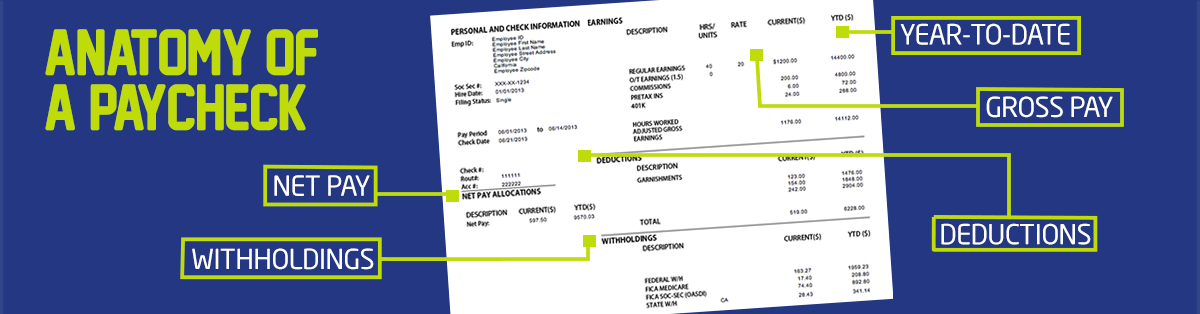
 Getting your first real paycheck can feel like a milestone. But when you look closely at the numbers, you might notice the amount that lands in your account is different from what you expected.
That difference comes from a combination of taxes, withholdings, and sometimes benefit deductions that are taken out before your pay reaches you. If no one has ever explained what those items mean, your pay stub can look like a list of confusing terms and abbreviations.
The good news is that once you understand the basics, your paycheck becomes much easier to read. It can even become a helpful tool for budgeting, planning, and making the most of what you earn.
.png?width=200&height=300) What Is the Difference Between Gross Pay and Net Pay?
What Is the Difference Between Gross Pay and Net Pay?
Your paycheck usually starts with two important numbers.
Gross Pay
This is the total amount you earned before any deductions are taken out. If you are paid hourly, it reflects your hours worked multiplied by your hourly rate. If you are salaried, it represents the portion of your annual salary for that pay period.
Net Pay
This is your take-home pay. It is the amount deposited into your bank account after taxes and other deductions are removed.
Many first-time earners are surprised by the difference between these two numbers. That difference comes from several common deductions.
Why Are Taxes Taken Out of Your Paycheck?
One of the largest deductions on most paychecks is income tax withholding.
Your employer withholds a portion of your earnings and sends it to the government on your behalf. This helps cover the income taxes you owe for the year.
The amount withheld depends on several factors, including:
- Your filing status on your W-4 form
- Whether you claim dependents
- State tax requirements (if your state collects income tax)
When tax season arrives, the amount that was withheld is compared with the taxes you actually owe. Depending on the situation, you may receive a refund or need to pay additional tax.
What Is FICA on a Paycheck? 
You will almost always see FICA taxes listed on your pay stub. FICA stands for the Federal Insurance Contributions Act.
These taxes fund two important federal programs:
Social Security
This program provides income for retirees and certain individuals with disabilities.
Medicare
This program helps cover healthcare costs for people age 65 and older, along with some younger individuals with disabilities.
Both employees and employers contribute to these programs. The amount withheld from your paycheck is based on a percentage of your earnings.
What Benefits Might Be Deducted From Your Paycheck?
If you receive benefits through your employer, you may see additional deductions on your paycheck.
Common examples include:
- Health insurance premiums
- Dental or vision insurance
- Retirement plan contributions such as a 401(k)
- Health Savings Accounts (HSAs) or Flexible Spending Accounts (FSAs)
Some of these deductions are taken before taxes, which can reduce your taxable income and lower the amount of tax withheld.
What Other Deductions Might Appear on a Paycheck?
Depending on your workplace, you might see other items on your pay stub, such as:
- Parking or commuter benefits
- Charitable contributions through payroll giving
- Wage garnishments ordered by a court
Not every paycheck includes these deductions, but they are normal when they appear.
Why Understanding Your Paycheck Matters
Learning how to read your pay stub can help you make smarter financial decisions.
When you understand where your money is going, it becomes easier to:
- Create a realistic budget
- Adjust tax withholding if needed
- Track retirement contributions or benefits
Your paycheck is more than just a deposit notification. It is a snapshot of your earnings, taxes, and financial progress.
Why You Should Review Your Pay Stub, Even with Direct Deposit .png?width=300&height=200)
If you receive direct deposit, it can be easy to ignore your pay stub and simply check that the money arrived in your account.
Most employers now provide digital pay statements through payroll apps or employee portals. Taking a minute to review your pay stub each pay period can help you understand your deductions, track your earnings, and catch any mistakes early.
It is a small habit that can make a big difference in staying on top of your finances.
Members First Is Here to Help
Understanding the basics of personal finance is an important step toward building long-term financial confidence. At Members First, helping members learn and grow financially is part of our mission.
If you are starting a new job, setting up direct deposit, or planning your savings goals, our team is here to help. Explore our budgeting tools and financial wellness resources online, or connect with a Member Services representative to talk through your financial goals.